

Mammoth Mountain sits in the Eastern Sierra Nevada, approximately 300 miles north of Los Angeles and 5 hours by car from Orange County. The town of Mammoth Lakes sits at roughly 7,900 feet elevation, and the mountain itself peaks at 11,059 feet — altitude that is worth factoring into planning, particularly for younger kids and anyone prone to headaches or fatigue at elevation. The drive up Highway 395 is long and largely remote, with limited services once you leave the high desert behind.
This is a destination that operates on two completely different gears depending on the season, and both versions are worth knowing.
In winter, Mammoth Mountain averages 33 feet of snow annually across 3,500 skiable acres and 25 lifts — numbers that make it one of the premier ski destinations in the country. The season often extends well into spring and occasionally summer. Beyond skiing and snowboarding, the mountain offers snowmobile tours, cross-country skiing, snowshoeing, and snow play at Woolly's Adventure Summit, which includes tubing and a mountain coaster. Winter temperatures at the base typically run between 25°F and 40°F. Weather can shift quickly and storms can be significant — road conditions on 395 require checking before every trip up.
Summer is a different place entirely. Temperatures from June through August range roughly between 50°F and 80°F, and the landscape opens into hiking trails, alpine lakes, and wide open sky. The Mammoth Lakes Basin holds five drive-up lakes — Mary, Twin, George, Mamie, and Horseshoe — where families can fish, paddleboard, and kayak without a major hike to get there. Devils Postpile National Monument and Rainbow Falls are accessible summer additions nearby. The Mammoth Mountain Bike Park runs lift-accessed trails through the summer, and Woolly's Adventure Summit transitions to a zip line, climbing wall, ropes course, and mountain coaster setup for warmer months.
The physical environment here is open, low-stimulation by nature, and largely predictable in structure — which works in favor of families who regulate better with space and fresh air than with crowds and noise. The town of Mammoth Lakes is small and navigable, with a Village area that keeps lodging, dining, and access reasonably consolidated.


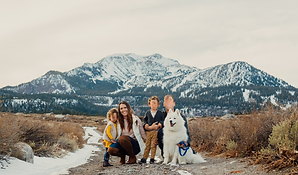

Mammoth Mountain

Mammoth Mountain is a six hour drive from Orange County. I have been making that drive since I was two years old — ski school every winter, every spring break, blizzard or blue sky. My dad loved it so much he bought a place there. So when we started our family this was never a question. The drive is long, the mountain is real, and the town has that worn-in, come-as-you-are energy that makes it easy to settle into. It doesn't feel like a resort that's performing for you. It just feels like the mountain.
Skiing with a neurodivergent kid who has motor planning challenges was something I honestly didn't know was possible — until we found Access Mammoth. I called them not even sure we qualified. They told me 70% of their athletes are autistic. Two instructors, follow-the-child's-lead pacing, and if the whole lesson is just getting used to snow boots — they're happy with that. I watched my son, who had struggled to crawl and walk, click into skis and push down a slope. I am not a crier. I could not stop.
Seven years later he's still out there pushing himself run by run. My daughter is bombing past him and I'm somehow yelling encouragement in two completely opposite directions at the same time. That's Mammoth for us — imperfect, loud, and one of the most important places we keep coming back to. The full story, the drive tips, and everything Access Mammoth is on the blog.

Ambiance Raw, expansive, and quietly overwhelming in the best way — Mammoth doesn't crowd you, it opens up around you. The village has its moments, but the mountain itself is its own kind of regulation.
Service Standard Access Mammoth is the reason this destination makes the list. Their adaptive ski and snowboard program is staffed by people who actually get it — patient, skilled, and genuinely invested in making the mountain accessible for kids whose nervous systems don't follow the standard playbook.
Experience Adaptability Mammoth without Access Mammoth is a beautiful place your kid can watch from the lodge. Mammoth with Access Mammoth is a mountain they can actually be on — and that difference is everything.
Sensory Environment The cold and altitude are real sensory variables that don't show up on the brochure — factor both into your prep before you go. Once your kid is regulated and geared up, the wide open mountain environment is about as low-crowd and low-chaos as outdoor adventure gets.
Overall Ease This trip requires planning — Access Mammoth programs need to be booked in advance and the logistics of a mountain trip with a neurodivergent kid are real. But the payoff is a genuinely inclusive experience that most families assume isn't available to them, and it is.

